
WHO THE BARSANE WERE
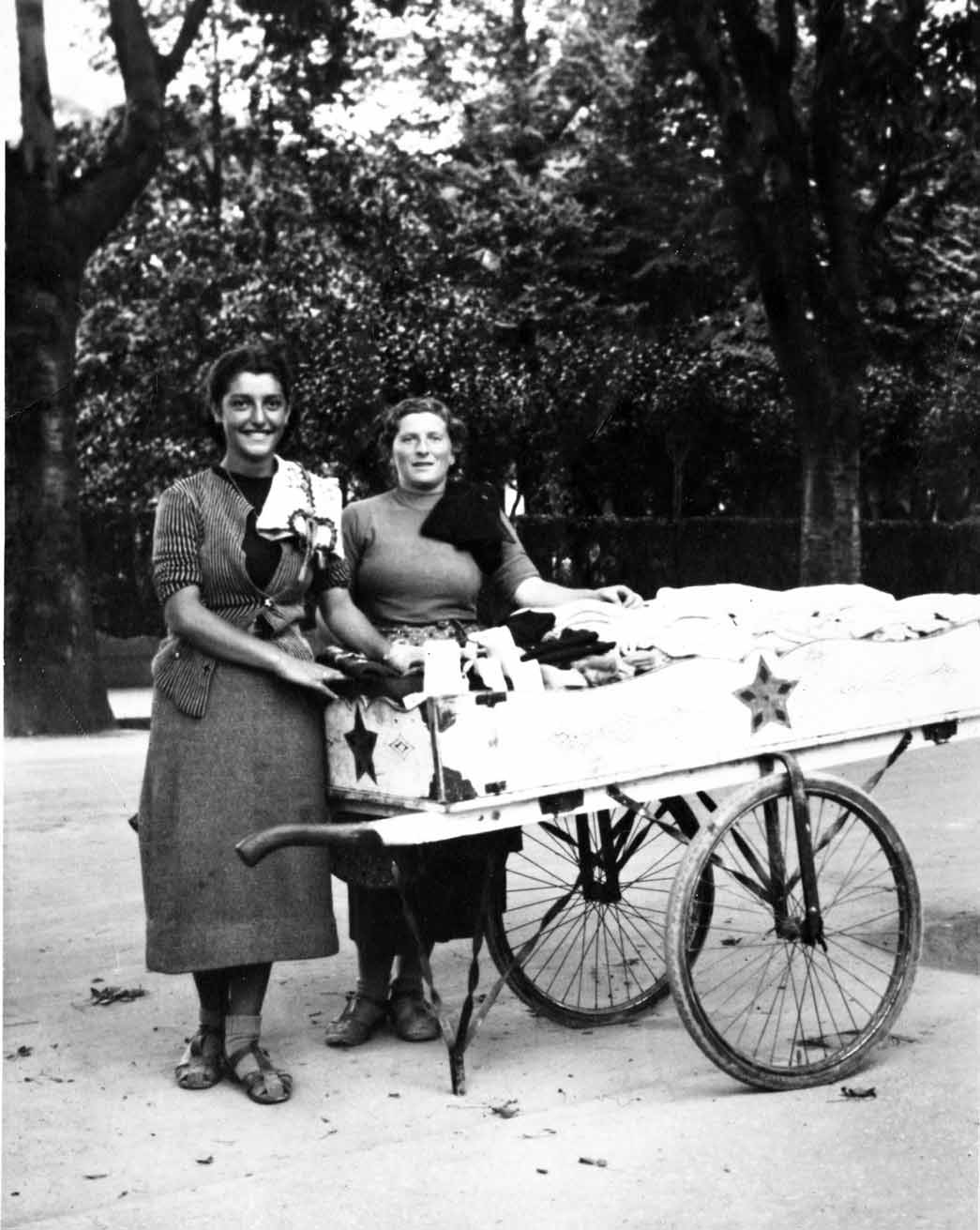
For over a century, from the mid-nineteenth century until the years following the Second World War, thousands of women from the Lunigiana — the Tuscan area around Bagnone, on the border with Liguria and Emilia — left their mountains to sell haberdashery, notions, and above all knitwear door to door in the countryside and towns of northern Italy. The territory where they worked was familiarly known as “la Barsana” (from Brescia, the first area they reached), and from this name comes the nickname by which they have gone down in history: the “barsane,” in the feminine — even though official records and trade associations diluted this for decades into the more convenient masculine plural, “barsan.”
They were women, often still girls, who set out from a poor land — a kind of “deep south of Tuscany” — where mountain agriculture was no longer enough to feed families once the chestnut flour ran out. Door-to-door selling arose as a natural offshoot of an already centuries-old tradition of seasonal male migration toward the Po Valley, France, and Corsica; but it was the women, more than the men, who turned it into a genuine family trade, and later into a small business.
THE STAGES OF A LIFE ON THE ROAD
The typical biography of a barsana followed an almost obligatory path, marked by very precise stages.
1. Girls as “servants” (from age 10–12). Girls set out while still barely adolescent, often placed as “servants” with “bosses” — usually an older couple — who exploited them, giving them meager food and lodging in stables or hay barns alongside the animals. Every morning they were handed goods to sell at a fixed price, and in the evening had to account for their earnings: those who did not sell enough were scolded, dismissed, and sometimes even beaten on returning home. Families, in order to lighten the number of mouths to feed, agreed to hand over their daughters for very little money.
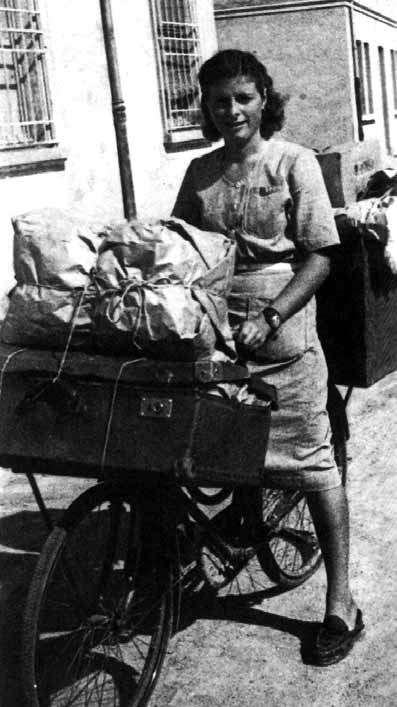
2. The apprenticeship of the “round.” With wicker backpacks, baskets (“cavagne”), or small carts, the girls learned the trade by following their mother or a more experienced relative: the mother sold the more valuable knitwear, while the girl was entrusted with the small haberdashery items — partly because, as the collected testimonies say, “it was pitiful” to see such a young girl selling, which helped close a few more sales.
3. Gaining independence and becoming a “boss.” Having built up some experience and a little capital, the more enterprising among them freed themselves from the relationship of servitude: they began to travel with a sister or a friend, then — often after marriage — formed a genuine family business, eventually taking on other “servant girls” and “boys” of their own.
4. Marriage and the couple's business. Upon marrying, the couple organized the work: the woman sold door to door with a cart or bicycle, while the man often stayed to take care of the house and cooking, or helped her with wholesale purchasing. The oral sources insist on this reversal of traditional roles: it was almost always the women who “made the history” of the trade, while the husbands merely “assisted.”
5. Settling down. With the postwar economic boom, the hand-pulled cart gave way to the bicycle, then to the motorbike, the small van, and the equipped car. Many families, after decades of seasonal work, settled permanently in the cities of northern Italy (Padua, Milan, Varese, Como, Cremona, Bergamo, Turin), founded wholesale warehouses or small shops, and the younger children often carried on the business, while the older mothers “retired” behind a fixed market stall.
6. Old age and redemption. When retirement finally came — a trade-union achievement of the 1960s — many barsane experienced it almost as a liberation, after a life of hardship: “When my birthday comes and I retire, I'm off,” one of them told her husband — and she did just that, returning to her home village with pride.
Fonte — Source: DADÀ, Adriana, Le “Barsane”. Venditrici ambulanti dalla Toscana al Nord Italia, Firenze, Morgana Edizioni, 2008, p. 2.
THE GREATEST SACRIFICE: LEAVING THE CHILDREN
The highest price paid by these women was not the physical toll — enormous as it was, between miles walked on foot, extremely heavy loads carried on their shoulders, and nights spent in hay barns — but the almost total renunciation of day-to-day motherhood.
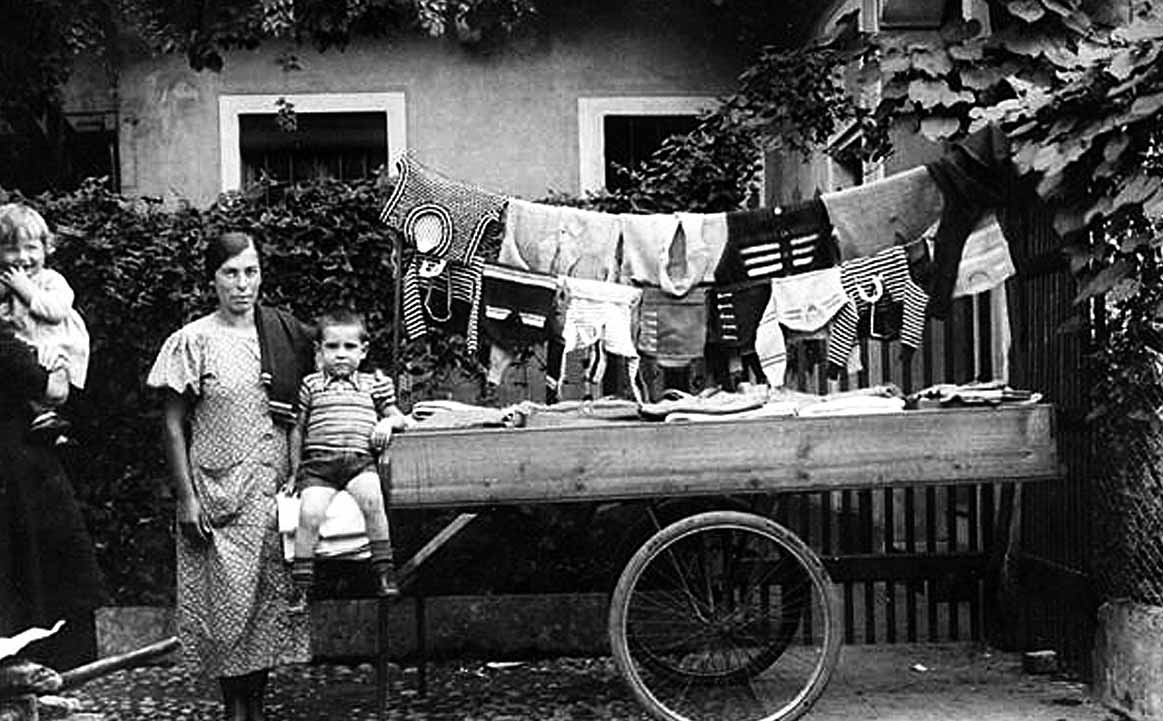
The trade required very long absences: they left after Easter and returned only in November, for the feast of Saint Catherine. Women came home just long enough to give birth, then entrusted their newborns to a relative — grandmothers, aunts, older sisters — or to a paid “wet nurse,” until the children were self-sufficient or of school age. Some children were “scattered” among different relatives, one per household, as one interviewed woman recounts, listing brothers and sisters each entrusted to a different family.
The testimonies collected by Adriana Dadà are heart-wrenching. One mother, remembered by her daughter, used to say that rather than see her children live through the same terribly hard life she had lived, she would almost have preferred to see them dead — a sign of just how much that work was perceived as a cruel fate rather than a choice. Another woman recounts leaving her son in swaddling clothes, only twenty days old, passed from arm to arm among several “milk mothers” before a stable wet nurse was found for him.
It should be said that many of these women, precisely in order to limit the suffering of separation, deliberately chose to have only one child: “We only had one, because it was so hard to leave them,” confesses one of the women interviewed, her face darkening at the mere memory.
Fonte — Source: DADÀ, Adriana, «Le Barsane», cit., p. 41.
THE CHILDREN'S POINT OF VIEW: A SILENT WOUND
While the mothers almost always tell their own pain in a “softened” way, filtered through decades of reticence and the need to justify their choices, it is in the voices of the children — today adults or elderly themselves — that the rawest part of this story comes to the surface.
One man recounts having been placed with his grandparents from early childhood, and having experienced that period with genuine affection; but the real trauma came when, at school age, he was “returned” to his biological parents: he felt literally uprooted from the bonds that, for him, had been his grandparents, forced even to regard a brother as a “stranger.” Since then — he confesses — he has never again been able to fully live in the present, always fearing that something good will suddenly be taken from him.
Another describes a quiet anger at never having been able, as a child, simply to call “mom” someone who was truly present: raised among relatives and then among nuns, he learned to suppress every need, for fear that showing it would push his parents even further away.
Not all the stories are equally painful: some, having returned to their parents after two years with a wet nurse, nonetheless kept an affectionate bond with her for the rest of their lives, without this undermining the relationship with their birth mother. But the common thread, almost everywhere, is the difficulty of rebuilding an attachment with parents seen only for a few months a year, and the question that some adult children have put to their own mothers, summing everything up: “Mom, but you weren't there in the moments when I needed you most.” The answer was almost always the same: they had had to work to support them.
Fonte — Source: DADÀ, Adriana, Le “Barsane”. Venditrici ambulanti dalla Toscana al Nord Italia, Firenze, Morgana Edizioni, 2008, p. 18.
PROS AND CONS: THE OUTCOMES OF A LIFE OF SACRIFICE
The benefits. The work of the barsane allowed entire families, and an entire backward area like the Lunigiana, to escape hunger and poverty, guaranteeing an income for generations once mountain farming was no longer enough. It gave many of these women — coming from a peasant world where women counted for little — a sense of self-worth, personal pride, and a central role within the family, often greater than that of their husbands: they managed the stock, the accounts, and the wholesale purchasing, and in many cases were the first women in their village to get a driving license so they could get around on their own. Some, once widowed, showed entrepreneurial abilities that their husbands, while alive, had only formally “covered” with a license in his name.
The costs. The price of this emancipation was paid above all by the children and by family life: early and prolonged separations, the risk of emotional bonds forming with figures other than the mother, psychological wounds that the collected testimonies still describe as vivid after seventy years, never truly processed because the society of the time — partly under the weight of local clerical influence — required these sacrifices to be regarded as a normal price of life, to be borne in silence. The women's bodies, too, paid a price: the marks left on their shoulders by the carrying-baskets, and feet ruined from walking miles on asphalt, never had time to heal between one working season and the next.
THE EMANCIPATION OF THE BARSANE
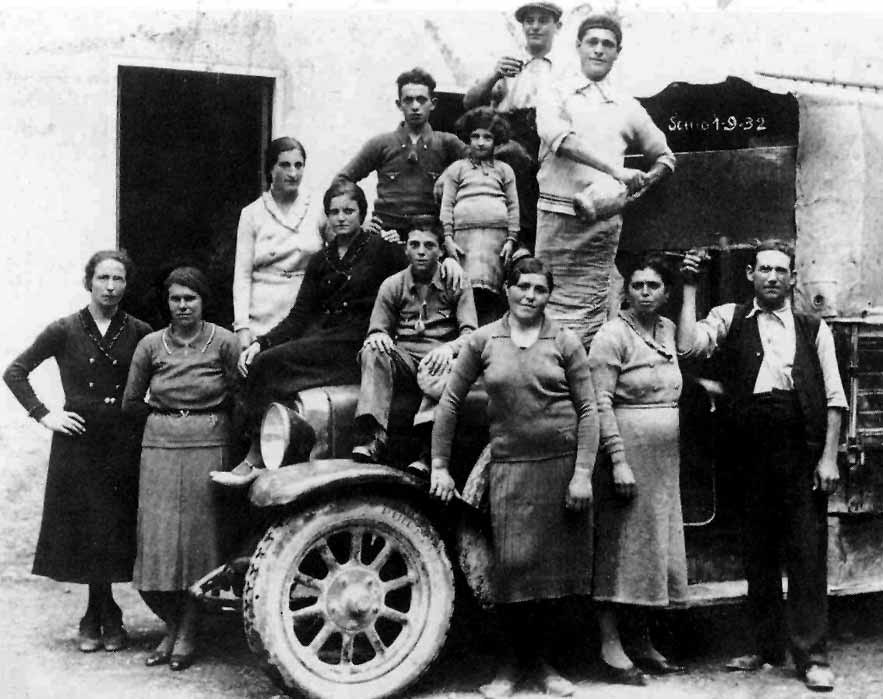
The barsane were, without knowing it and without any formal recognition, true entrepreneurs: they managed capital, credit, warehouses, and a workforce (the youngest “servant girls”) in a sector — textiles — that exploited precisely their willingness to give themselves entirely to the work in order to cut distribution costs. Their contribution, long “invisible” because it was hidden behind licenses registered in their husbands' names and behind a trade name declined only in the masculine (“i barsan”), has today finally found a voice thanks to the work of collecting photographs and oral testimonies that underlies this book.
The emancipation of these women was thus real but ambiguous: economic and social, won through decades of hard work and growing independence (to the point, for some, of being free to decide for themselves when to retire); but marked by an emotional price paid not by them alone, but passed on — often in silence — to an entire generation of children. Adriana Dadà's book restores historical dignity to these women without concealing their contradictions: pioneers of a female independence won in the field, even before it existed in rights written on paper, but also mothers forced into a renunciation that their own daughters and sons, even today, describe with voices that break.
Fonte — Source: DADÀ, Adriana, «Le Barsane», cit., p. 45.
Source: DADÀ, Adriana, Le “Barsane”. Venditrici ambulanti dalla Toscana al Nord Italia, Florence, Morgana Edizioni, 2008.
